biolegend流式抗体-Biotin anti-β-Amyloid, x-42 Antibody (Previously Covance catalog# SIG-39170)

Pricing & Availability

Clone
1-11-3 (See other available formats)
Regulatory Status
RUO
Other Names
Amyloid beta A4 protein, preA4, protease nexin-II, peptidase nexin-II, beta-amyloid peptide, alzheimer disease amyloid protein, cerebral vascular amyloid peptide, APP, Amyloid Precursor Protein
Previously
Covance Catalog# SIG-39170
Isotype
Rabbit IgG
Ave. Rating
Submit a Review
Product Citations
publications
Biotin anti-β-Amyloid, x-42 Antibody (Previously Covance catalog# SIG-39170)
Positive staining of Clone 1-11-3 on formalin-fixed paraffin-embedded Human Alzheimer’s Brain at 10 µg/mL.

Compare all formats

Input string was not in a correct format.

Cat # Size Price
812103 50 µL $398.00

DescriptionAmyloid beta (Aβ or Amyloid beta) denotes peptides of 36-43 amino acids in length that are crucially involved in Alzheimer’s disease as the main component of the amyloid plaques found in the brains of Alzheimer patients. The peptides result from the amyloid precursor protein (APP), which is cut by certain enzymes to yield Aβ. Aβ molecules can aggregate to form oligomers (known as “seeds”) which are believed to be able to induce other Aβ molecules to also take the misfolded oligomeric form, leading to a chain reaction akin to a prion infection. The seeds or the resulting amyloid plaques are toxic to nerve cells. The other protein implicated in Alzheimer’s disease, tau protein, also forms such prion-like misfolded oligomers, and there is some evidence that misfolded Aβ can induce tau to misfold.

Product Details

Technical data sheet

Product Details

Reactivity
Human
Antibody Type
Monoclonal
Host Species
Rabbit
Formulation
Phosphate-buffered solution.
Preparation
The antibody was purified by affinity chromatography.
Concentration
1 mg/ml
Storage & Handling
The antibody solution should be stored undiluted between 2°C and 8°C. Please note the storage condition for this antibody has been changed from -20°C to between 2°C and 8°C. You can also check your vial or your CoA to find the most accurate storage condition for this antibody.
Application
ELISA, IHC
Recommended Usage
Each lot of this antibody is quality control tested by ELISA assay.

The optimal working dilution should be determined for each specific assay condition.
ELISA: 1:10 (then 10-fold serial dilutions)
IHC: 1:100 – 1:200*

Tissue: Formalin-fixed Paraffin-embedded sections
Pretreatment: 70% Formic Acid
Primary Incubation: 24 hours at 4°C

Application Notes
This antibody is effective in Immunohistochemistry (IHC) and Enzyme-linked Immunosorbent Assay (ELISA).

*Positive control tissue: Human Alzheimer’s Brain

This antibody is reactive to the C-terminus of beta amyloid and is specific for the isoform that ends at the 42nd amino acid.

RRID
AB_2564764 (BioLegend Cat. No. 812103)
Disclaimer
Covered by US patents 5,675,063 and 7,429,487. Sold under license from Epitomics.

Antigen Details

Biology Area
Cell Biology, Neurodegeneration, Neuroscience, Protein Misfolding and Aggregation
Molecular Family
APP/β-Amyloid
Gene ID
351 View all products for this Gene ID
UniProt
View information about beta-Amyloid, x-42 on UniProt.org

Related FAQs

How many biotin molecules are per antibody structure?
We don’t routinely measure the number of biotins with our antibody products but the number of biotin molecules range from 3-6 molecules per antibody.

Other Formats

View All β-Amyloid, x-42 Reagents Request Custom Conjugation

Description Clone Applications
Biotin anti-β-Amyloid, x-42 1-11-3 ELISA, IHC
Purified anti-β-Amyloid, x-42 1-11-3 IHC-P, WB

biolegend流式抗体-Purified anti-human Ig light chain λ Antibody

Pricing & Availability

Clone
1-155-2 (See other available formats)
Regulatory Status
RUO
Other Names
Ig
Isotype
Mouse IgG1, κ
Ave. Rating
Submit a Review
Product Citations
publications
Purified anti-human Ig light chain λ Antibody
Overnight cultured human peripheral blood lymphocytes were stained with purified anti-human Ig Light Chain λ (clone, 1-155-2) (upper panel) or purified mIgG1, κ isotype control (bottom) followed by anti-mouse IgG FITC then stained with CD19 APC.

Compare all formats

Input string was not in a correct format.

Cat # Size
374602 100 µg

DescriptionThe 1-155-2 antibody reacts with both soluble and membrane human immunoglobulin light chain lambda (λ). It does not react with human immunoglobulin light chain kappa (κ) or heavy chains

Product Details

Technical data sheet

Product Details

Reactivity
Human
Antibody Type
Monoclonal
Host Species
Mouse
Immunogen
human IgA1-λ myeloma protein
Formulation
Phosphate-buffered solution, pH 7.2, containing 0.09% sodium azide.
Preparation
The antibody was purified by affinity chromatography.
Concentration
0.5 mg/ml
Storage & Handling
The antibody solution should be stored undiluted between 2°C and 8°C.
Application
FC – Quality tested
Recommended Usage
Each lot of this antibody is quality control tested by immunofluorescent staining with flow cytometric analysis
RRID
AB_2721351 (BioLegend Cat. No. 374602)

Antigen Details

Distribution
Subset of B cells
Cell Type
B cells
Gene ID
3535 View all products for this Gene ID
UniProt
View information about Ig light chain lambda on UniProt.org

Related Products

Description Clone Applications

Related FAQs

There are no FAQs for this product.

Other Formats

View All Ig light chain λ Reagents Request Custom Conjugation

Description Clone Applications
Purified anti-human Ig light chain λ 1-155-2 FC

biolegend流式抗体-PE anti-human TCL1 Antibody

Pricing & Availability

Clone
1-21 (See other available formats)
Regulatory Status
RUO
Other Names
T-cell leukemia/lymphoma protein 1A, Protein p14 TCL1, Oncogene TCL1, TCL-1
Isotype
Mouse IgG2b, κ
Ave. Rating
Submit a Review
Product Citations
publications
PE anti-human TCL1 Antibody
Human peripheral blood lymphocytes stained with anti-CD19 (HIB19) APC then intracellularly stained with 1-21 PE
  • PE anti-human TCL1 Antibody
    Human peripheral blood lymphocytes stained with anti-CD19 (HIB19) APC then intracellularly stained with 1-21 PE

Compare all formats See PE spectral data

Input string was not in a correct format.

Cat # Size Price Quantity Check Availability Save
330506 100 tests $270.00

Check Availability

Need larger quantities of this item?
Request Bulk Quote

Description

Product Details

Technical data sheet

Product Details

Reactivity
Human
Antibody Type
Monoclonal
Host Species
Mouse
Immunogen
outer α-loop region of TCL1 peptide
Formulation
Phosphate-buffered solution, pH 7.2, containing 0.09% sodium azide and 0.2% (w/v) BSA (origin USA).
Preparation
The antibody was purified by affinity chromatography, and conjugated with PE under optimal conditions.
Concentration
Lot-specific (please contact technical support for concentration and total µg amount, or use our Lookup tool if you have a lot number.)
Storage & Handling
The antibody solution should be stored undiluted between 2°C and 8°C, and protected from prolonged exposure to light. Do not freeze.
Application
ICFC – Quality tested
Recommended Usage
Each lot of this antibody is quality control tested by intracellular immunofluorescent staining with flow cytometric analysis. For flow cytometric staining, the suggested use of this reagent is 5 µl per million cells in 100 µl staining volume or 5 µl per 100 µl of whole blood.
Excitation Laser
Blue Laser (488 nm)
Green Laser (532 nm)/Yellow-Green Laser (561 nm)
Application Notes
Additional reported applications include: immunoprecipitation, western blot, immunohistochemical staining of frozen or formalin-fixed, paraffin embedded tissue sections.
Application References(PubMed link indicates BioLegend citation)
  1. Herling M, et al. 2008. Blood 111:328
  2. Herling M, et al. 2007. Am. J. Surg. Pathol. 31:1123
Product Citations
  1. Kubota S, et al. 2019. Nat Commun. 10:1653. PubMed
  2. O’Connor T, et al. 2020. Cancer Cell. 36(3):250-267. PubMed
RRID
AB_2204407 (BioLegend Cat. No. 330506)

Antigen Details

Structure
Beta barrel protein, 14kD
Distribution
Cytoplasm
Function
Enhances Akt mediated cell survival, stabilizes mitochondrial membrane potential
Interaction
Akt1, Akt2, Akt3, caco2
Biology Area
Cell Biology, Immunology
Molecular Family
CD Molecules
Antigen References
1. Narducci MG et al. 2000. Cancer Research 60:2095.
2. Teitell MA et al. 2005 Nat. Rev. Cancer 5:640
3. Laine J et al.2000. Molecular Cell 6:395
4. Virgilio L et al. 1994. Proc. Natl. Acad. Sci. 91:12530
5. Masayuk N et al. 2007 FASEB J. 21:2273
6. Despouy G et al. 2007 Blood 110:4406
7. Rhine S et al. 2006 Blood 108:1991
Gene ID
8115 View all products for this Gene ID
UniProt
View information about TCL1 on UniProt.org

Related Products

Description Clone Applications

Related FAQs

What type of PE do you use in your conjugates?
We use R-PE in our conjugates.

Other Formats

View All TCL1 Reagents Request Custom Conjugation

Description Clone Applications
Alexa Fluor® 647 anti-human TCL1 1-21 ICFC
PE anti-human TCL1 1-21 ICFC

biolegend流式抗体-Purified anti-mouse I-Ak (Aβk) Antibody

Pricing & Availability

Clone
10-3.6 (See other available formats)
Regulatory Status
RUO
Other Names
MHC class II
Isotype
Mouse (CWB) IgG2a, κ
Ave. Rating
Submit a Review
Product Citations
publications
Purified anti-mouse I-Ak (Aβk) Antibody
C3H mouse splenocytes stained with 10-3.6 purified, followed by anti-mouse IgG2a FITC

Compare all formats

Input string was not in a correct format.

Cat # Size Price
109902 500 µg $215.00

DescriptionThe 10-3.6 antibody reacts with the β chain of the I-Ak MHC class II alloantigen. This class II molecule is expressed on antigen presenting cells (including B cells) and a subset of T cells from H-2k bearing mice and involved in antigen presentation to T cells expressing CD3/TCR and CD4 proteins. The 10-3.6 antibody cross-reacts with I-Af,r,s antigens and I-Ag7 of NOD mice; it does not react with other haplotypes (e.g., b, d, p, q).


Product Details

Reactivity
Mouse k haplotype, Cross-reacts with H-2 f,r,s haplotypes
Antibody Type
Monoclonal
Host Species
Mouse
Immunogen
C3H mouse splenocytes
Formulation
Phosphate-buffered solution, pH 7.2, containing 0.09% sodium azide.
Preparation
The antibody was purified by affinity chromatography.
Concentration
0.5 mg/ml
Storage & Handling
The antibody solution should be stored undiluted between 2°C and 8°C.
Application
FC – Quality tested
IHC-F, IP – Reported in the literature, not verified in house
Recommended Usage
Each lot of this antibody is quality control tested by immunofluorescent staining with flow cytometric analysis
Application Notes
Additional reported applications (for the relevant formats) include immunoprecipitation1,2, protection against autoimmune IDDM3, in vitro blocking of antigen-specific MHC-restricted responses and in vivo inhibition of lymphoma growth4, and immunohistochemical staining5 of acetone-fixed frozen sections.

This clone does not cross react with other haplotypes (e.g. b, d, p, q).

Application References(PubMed link indicates BioLegend citation)
  1. Landais D, et al. 1986. J. Immunol. 137:3002. (IP)
  2. Kupinski JM, et al. 1983. J. Immunol. 130:2277. (IP)
  3. Kappler JW, et al. 1981. J. Exp. Med. 153:1198.
  4. Alisauskas RM, et al. 1986. Immunopharmacology 12:1.
  5. Reis e Sousa and Germain 1999. J. Immunol. 162:6652. (IHC)
  6. Yui MA, et al. 2010. J. Immunol. 185:284. PubMed
  7. Gaudreau S, et al. 2007. J. Immunol. 179:3638. (FC)
Product Citations
  1. Drake JR, et al. 2019. Immunohorizons. 3:28. PubMed
RRID
AB_313451 (BioLegend Cat. No. 109902)

Antigen Details

Structure
β chain of MHC class II
Distribution
B cell and activated T cells, APCs of H-2b mice
Function
Antigen presentation
Ligand/Receptor
CD3/TCR, CD4
Cell Type
Antigen-presenting cells, B cells, T cells, Tregs
Biology Area
Immunology, Innate Immunity
Molecular Family
MHC Antigens
Antigen References
1. Watts C. 1997. Ann. Rev. Immunol. 15:821.
2. Pamer E, et al. 1998. Ann. Rev. Immunol. 16:323.
Gene ID
14960 View all products for this Gene ID
UniProt
View information about I-Ak on UniProt.org

Other Formats

View All I-Ak Reagents Request Custom Conjugation

Description Clone Applications
FITC anti-mouse I-Ak (Aβk) 10-3.6 FC
PE anti-mouse I-Ak (Aβk) 10-3.6 FC
Purified anti-mouse I-Ak (Aβk) 10-3.6 FC, IHC-F, IP

biolegend流式抗体,Alexa Fluor 700 抗人 CD64 抗体,biolegend 305039

Pricing & Availability

Clone
10.1 (See other available formats)
Regulatory Status
RUO
Workshop
VI MA36
Other Names
FcγRI, FcR I
Isotype
Mouse IgG1, κ
Ave. Rating
Submit a Review
Product Citations
publications
Alexa Fluor® 700 anti-human CD64 Antibody
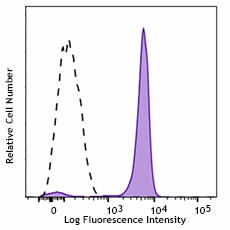
Human peripheral blood monocytes were stained with CD64 (Clone 10.1) Alexa Fluor 700 (filled histogram) or mouse IgG1 Alexa Fluor 700 isotype control (open histogram).
人外周血单核细胞用 CD64(克隆 10.1)Alexa Fluor 700(填充直方图)或小鼠 IgG1 Alexa Fluor 700 同种型对照(开放直方图)染色。

Compare all formats See Alexa Fluor® 700 spectral data

Input string was not in a correct format.Input string was not in a correct format.

Cat # Size Price Quantity Check Availability Save
305039 25 tests $105.00

Check Availability

Need larger quantities of this item?
Request Bulk Quote

305040 100 tests $225.00

Check Availability

Need larger quantities of this item?
Request Bulk Quote

DescriptionCD64 is a 72 kD single chain type I glycoprotein also known as FcγRI and FcR I. CD64 is a member of the immunoglobulin superfamily and is expressed on monocytes/macrophages, dendritic cells, and activated granulocytes. The expression can be upregulated by IFN-γ stimulation. CD64 binds IgG immune complex. It plays a role in antigen capture, phagocytosis of IgG/antigen complexes, and antibody-dependent cellular cytotoxicity (ADCC).

CD64 是一种 72 kD 的单链 I 型糖蛋白,也称为 FcγRI 和 FcR I。CD64 是免疫球蛋白超家族的成员,在单核细胞/巨噬细胞、树突状细胞和活化的粒细胞上表达。 表达可以通过干扰素γ 刺激上调。 CD64 结合 IgG 免疫复合物。 它在抗原捕获、IgG/抗原复合物的吞噬作用和抗体依赖性细胞毒性 (ADCC) 中发挥作用。

Product Details

Technical data sheet

Product Details

Reactivity
Human, Baboon, Capuchin Monkey, Chimpanzee, Cynomolgus, Rhesus, Squirrel Monkey
Antibody Type
Monoclonal
Host Species
Mouse
Immunogen
Human rheumatoid synovial fluid cells and fibronectin-purified monocytes.
Formulation
Phosphate-buffered solution, pH 7.2, containing 0.09% sodium azide and 0.2% (w/v) BSA (origin USA).
Preparation
The antibody was purified by affinity chromatography and conjugated with Alexa Fluor® 700 under optimal conditions.
Concentration
Lot-specific (please contact technical support for concentration and total µg amount, or use our Lookup tool if you have a lot number.)
Storage & Handling
The antibody solution should be stored undiluted between 2°C and 8°C, and protected from prolonged exposure to light. Do not freeze.
Application
FC – Quality tested
Recommended Usage
Each lot of this antibody is quality control tested by immunofluorescent staining with flow cytometric analysis. For flow cytometric staining, the suggested use of this reagent is 5 µl per million cells in 100 µl staining volume or 5 µl per 100 µl of whole blood.

View full statement regarding label licenses

Excitation Laser
Red Laser (633 nm)
Application Notes
Clone 10.1 recognizes the EC3 epitope of CD64. While both contain the EC3 domain, in-house testing suggests that clone 10.1 preferentially binds to CD64A (FcγRIA), but not CD64B (FcγRIB). Additional reported applications (for the relevant formats) include: blocking of human IgG3 and murine IgG2a binding to FcγRI2,5,6,11 and immunohistochemical staining of acetone-fixed frozen tissue sections12.

克隆 10.1 识别 CD64 的 EC3 表位。 虽然两者都包含 EC3 结构域,但内部测试表明克隆 10.1 优先结合 CD64A (FcγRIA),而不是 CD64B (FcγRIB)。 其他报告的应用(针对相关格式)包括:阻断人 IgG3 和鼠 IgG2a 与 FcγRI2、5、6、11 的结合以及丙酮固定冷冻组织切片的免疫组织化学染色 12。

Application References(PubMed link indicates BioLegend citation)
  1. McMichael A, et al. Eds. 1987. Leucocyte Typing III. Oxford University Press. New York.
  2. Schlossman S, et al. Eds. 1995. Leucocyte Typing V. Oxford University Press. New York. p. 874.
  3. Kishimoto T, et al. Eds. 1997. Leucocyte Typing VI. Garland Publishing Inc. London.
  4. Holl V, et al. 2004. J. Immunol. 173:6274.
  5. Hober D, et al. 2002. J. Gen. Virol. 83:2169.
  6. Cho HJ, et al. 2007. Physiol Genomics 149:60.
  7. van Tits L, et al. 2005. Arterioscler Thromb Vasc Biol. 25:717. PubMed
  8. Bruhns P, et al. 2008. Blood 113:3716. PubMed
  9. Yoshino N, et al. 2000. Exp. Anim. (Tokyo) 49:97. (FC)
  10. Carter DL, et al. 1999. Cytometry 37:41. (FC)
  11. Dougherty GJ, et al. 1987. Eur. J. Immunol. 17:1453.
  12. Blom AB, et al. 2003. Arthritis Rheum. 48(4):1002-14. (IHC)
RRID
AB_2800775 (BioLegend Cat. No. 305039)
AB_2800776 (BioLegend Cat. No. 305040)

Antigen Details

Structure
Ig superfamily, type I glycoprotein, 72 kD
Distribution
Monocytes, macrophages, dendritic cells, activated granulocytes
Function
Phagocytosis, ADCC
Ligand/Receptor
IgG receptor
Cell Type
Dendritic cells, Granulocytes, Macrophages, Monocytes
Biology Area
Immunology, Innate Immunity
Molecular Family
CD Molecules, Fc Receptors
Antigen References
1. Hulett M, et al. 1994. Adv. Immunol. 57:1.
2. van de Winkel J, et al. 1993. Immunol. Today 14:215.
Gene ID
2209 View all products for this Gene ID
UniProt
View information about CD64 on UniProt.org

Related FAQs

Is our human Trustain FcX™ (cat# 422302) compatible with anti human CD16, CD32 and CD64 clones 3G8, FUN-2 and 10.1 respectively?
Yes

Other Formats

View All CD64 Reagents Request Custom Conjugation

Description Clone Applications
Biotin anti-human CD64 10.1 FC
FITC anti-human CD64 10.1 FC
PE anti-human CD64 10.1 FC
Purified anti-human CD64 10.1 FC, IHC-F, Block
Alexa Fluor® 488 anti-human CD64 10.1 FC
Alexa Fluor® 647 anti-human CD64 10.1 FC
APC anti-human CD64 10.1 FC
Pacific Blue™ anti-human CD64 10.1 FC
Brilliant Violet 421™ anti-human CD64 10.1 FC
PE/Cyanine7 anti-human CD64 10.1 FC
PerCP/Cyanine5.5 anti-human CD64 10.1 FC
APC/Cyanine7 anti-human CD64 10.1 FC
Brilliant Violet 510™ anti-human CD64 10.1 FC
Purified anti-human CD64 (Maxpar® Ready) 10.1 FC, CyTOF®
PE/Dazzle™ 594 anti-human CD64 10.1 FC
Brilliant Violet 605™ anti-human CD64 10.1 FC
APC/Fire™ 750 anti-human CD64 10.1 FC
PE anti-human CD64 10.1 FC
PE/Dazzle™ 594 anti-human CD64 10.1 FC
FITC anti-human CD64 10.1 FC
TotalSeq™-A0162 anti-human CD64 10.1 PG
Brilliant Violet 711™ anti-human CD64 10.1 FC
Alexa Fluor® 700 anti-human CD64 10.1 FC
Brilliant Violet 785™ anti-human CD64 10.1 FC
TotalSeq™-C0162 anti-human CD64 10.1 PG
Ultra-LEAF™ Purified anti-human CD64 10.1 FC, IHC-F, Block
TotalSeq™-B0162 anti-human CD64 10.1 PG
TotalSeq™-D0162 anti-human CD64 10.1 PG
GMP PE anti-human CD64 10.1 FC
GMP FITC anti-human CD64 10.1 FC

biolegend流式抗体,生物素抗人 CD64 抗体,biolegend 305004

Pricing & Availability

Clone
10.1 (See other available formats)
Regulatory Status
RUO
Workshop
VI MA36
Other Names
FcγRI, FcR I
Isotype
Mouse IgG1, κ
Ave. Rating
Submit a Review
Product Citations
publications
Biotin anti-human CD64 Antibody
Human peripheral blood monocytes stained with 10.1 FITC

Compare all formats

Input string was not in a correct format.

Cat # Size Price Quantity Check Availability
305004 100 µg $160.00

Check Availability

Need larger quantities of this item?
Request Bulk Quote

DescriptionCD64 is a 72 kD single chain type I glycoprotein also known as FcγRI and FcR I. CD64 is a member of the immunoglobulin superfamily and is expressed on monocytes/macrophages, dendritic cells, and activated granulocytes. The expression can be upregulated by IFN-γ stimulation. CD64 binds IgG immune complex. It plays a role in antigen capture, phagocytosis of IgG/antigen complexes, and antibody-dependent cellular cytotoxicity (ADCC).

说明 CD64 是一种 72 kD 的单链 I 型糖蛋白,也称为 FcγRI 和 FcR I。CD64 是免疫球蛋白超家族的成员,在单核细胞/巨噬细胞、树突状细胞和活化的粒细胞上表达。 表达可以通过干扰素γ 刺激上调。 CD64 结合 IgG 免疫复合物。 它在抗原捕获、IgG/抗原复合物的吞噬作用和抗体依赖性细胞毒性 (ADCC) 中发挥作用。

Product Details

Technical data sheet

Product Details

Reactivity
Human, Baboon, Capuchin Monkey, Chimpanzee, Cynomolgus, Rhesus, Squirrel Monkey
Antibody Type
Monoclonal
Host Species
Mouse
Immunogen
Human rheumatoid synovial fluid cells and fibronectin-purified monocytes.
Formulation
Phosphate-buffered solution, pH 7.2, containing 0.09% sodium azide.
Preparation
The antibody was purified by affinity chromatography, and conjugated with biotin under optimal conditions.
Concentration
0.5 mg/ml
Storage & Handling
The antibody solution should be stored undiluted between 2°C and 8°C. Do not freeze.
Application
FC – Quality tested
Recommended Usage
Each lot of this antibody is quality control tested by immunofluorescent staining with flow cytometric analysis
Application Notes
Clone 10.1 recognizes the EC3 epitope of CD64. While both contain the EC3 domain, in-house testing suggests that clone 10.1 preferentially binds to CD64A (FcγRIA), but not CD64B (FcγRIB). Additional reported applications (for the relevant formats) include: blocking of human IgG3 and murine IgG2a binding to FcγRI2,5,6,11 and immunohistochemical staining of acetone-fixed frozen tissue sections12.
Application References
反应性
人、狒狒、卷尾猴、黑猩猩、食蟹猴、恒河猴、松鼠猴
抗体类型
单克隆
宿主物种
老鼠
免疫原
人类风湿滑液细胞和纤连蛋白纯化的单核细胞。
公式
磷酸盐缓冲溶液,pH 7.2,含有 0.09% 叠氮化钠。
准备
通过亲和层析纯化抗体,并在最佳条件下与生物素结合。
浓度
0.5毫克/毫升
储存和处理
抗体溶液应在 2°C 至 8°C 之间未经稀释储存。不要冻结。
应用
FC – 质量测试推荐用法
每批该抗体均通过免疫荧光染色和流式细胞术分析进行质量控制测试应用笔记
克隆 10.1 识别 CD64 的 EC3 表位。虽然两者都包含 EC3 结构域,但内部测试表明克隆 10.1 优先结合 CD64A (FcγRIA),而不是 CD64B (FcγRIB)。其他报告的应用(针对相关格式)包括:阻断人 IgG3 和鼠 IgG2a 与 FcγRI2、5、6、11 的结合以及丙酮固定冷冻组织切片的免疫组织化学染色 12。

应用参考

(PubMed link indicates BioLegend citation)

  1. McMichael A, et al. Eds. 1987. Leucocyte Typing III. Oxford University Press. New York.
  2. Schlossman S, et al. Eds. 1995. Leucocyte Typing V. Oxford University Press. New York. p. 874.
  3. Kishimoto T, et al. Eds. 1997. Leucocyte Typing VI. Garland Publishing Inc. London.
  4. Holl V, et al. 2004. J. Immunol. 173:6274.
  5. Hober D, et al. 2002. J. Gen. Virol. 83:2169.
  6. Cho HJ, et al. 2007. Physiol Genomics 149:60.
  7. van Tits L, et al. 2005. Arterioscler Thromb Vasc Biol. 25:717. PubMed
  8. Bruhns P, et al. 2008. Blood 113:3716. PubMed
  9. Yoshino N, et al. 2000. Exp. Anim. (Tokyo) 49:97. (FC)
  10. Carter DL, et al. 1999. Cytometry 37:41. (FC)
  11. Dougherty GJ, et al. 1987. Eur. J. Immunol. 17:1453.
  12. Blom AB, et al. 2003. Arthritis Rheum. 48(4):1002-14. (IHC)
RRID
AB_314488 (BioLegend Cat. No. 305004)

Antigen Details

Structure
Ig superfamily, type I glycoprotein, 72 kD
Distribution
Monocytes, macrophages, dendritic cells, activated granulocytes
Function
Phagocytosis, ADCC
Ligand/Receptor
IgG receptor
Cell Type
Dendritic cells, Granulocytes, Macrophages, Monocytes
Biology Area
Immunology, Innate Immunity
Molecular Family
CD Molecules, Fc Receptors
Antigen References
1. Hulett M, et al. 1994. Adv. Immunol. 57:1.
2. van de Winkel J, et al. 1993. Immunol. Today 14:215.
Gene ID
2209 View all products for this Gene ID
UniProt
View information about CD64 on UniProt.org

Related FAQs

Is our human Trustain FcX™ (cat# 422302) compatible with anti human CD16, CD32 and CD64 clones 3G8, FUN-2 and 10.1 respectively?
Yes
How many biotin molecules are per antibody structure?
We don’t routinely measure the number of biotins with our antibody products but the number of biotin molecules range from 3-6 molecules per antibody.

Other Formats

View All CD64 Reagents Request Custom Conjugation

Description Clone Applications
Biotin anti-human CD64 10.1 FC
FITC anti-human CD64 10.1 FC
PE anti-human CD64 10.1 FC
Purified anti-human CD64 10.1 FC, IHC-F, Block
Alexa Fluor® 488 anti-human CD64 10.1 FC
Alexa Fluor® 647 anti-human CD64 10.1 FC
APC anti-human CD64 10.1 FC
Pacific Blue™ anti-human CD64 10.1 FC
Brilliant Violet 421™ anti-human CD64 10.1 FC
PE/Cyanine7 anti-human CD64 10.1 FC
PerCP/Cyanine5.5 anti-human CD64 10.1 FC
APC/Cyanine7 anti-human CD64 10.1 FC
Brilliant Violet 510™ anti-human CD64 10.1 FC
Purified anti-human CD64 (Maxpar® Ready) 10.1 FC, CyTOF®
PE/Dazzle™ 594 anti-human CD64 10.1 FC
Brilliant Violet 605™ anti-human CD64 10.1 FC
APC/Fire™ 750 anti-human CD64 10.1 FC
PE anti-human CD64 10.1 FC
PE/Dazzle™ 594 anti-human CD64 10.1 FC
FITC anti-human CD64 10.1 FC
TotalSeq™-A0162 anti-human CD64 10.1 PG
Brilliant Violet 711™ anti-human CD64 10.1 FC
Alexa Fluor® 700 anti-human CD64 10.1 FC
Brilliant Violet 785™ anti-human CD64 10.1 FC
TotalSeq™-C0162 anti-human CD64 10.1 PG
Ultra-LEAF™ Purified anti-human CD64 10.1 FC, IHC-F, Block
TotalSeq™-B0162 anti-human CD64 10.1 PG
TotalSeq™-D0162 anti-human CD64 10.1 PG
GMP PE anti-human CD64 10.1 FC
GMP FITC anti-human CD64 10.1 FC

biolegend流式抗体,Brilliant Violet 510 抗人 CD64 抗体

Pricing & Availability

Clone
10.1 (See other available formats)
Regulatory Status
RUO
Workshop
VI MA36
Other Names
FcγRI, FcR I
Isotype
Mouse IgG1, κ
Ave. Rating
Submit a Review
Product Citations
publications
Brilliant Violet 510™ anti-human CD64 Antibody
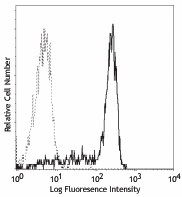
Human peripheral blood monocytes were stained with anti-human CD64 (clone 10.1) Brilliant Violet 510™ (filled histogram) or mouse IgG1, κ Brilliant Violet 510™ isotype control (open histogram).

Compare all formats See Brilliant Violet 510™ spectral data

Input string was not in a correct format.Input string was not in a correct format.

Cat # Size Price Quantity Check Availability Save
305027 25 tests $190.00

Check Availability
Need larger quantities of this item?
Request Bulk Quote
305028 100 tests $370.00

Check Availability
Need larger quantities of this item?
Request Bulk Quote

DescriptionCD64 is a 72 kD single chain type I glycoprotein also known as FcγRI and FcR I. CD64 is a member of the immunoglobulin superfamily and is expressed on monocytes/macrophages, dendritic cells, and activated granulocytes. The expression can be upregulated by IFN-γ stimulation. CD64 binds IgG immune complex. It plays a role in antigen capture, phagocytosis of IgG/antigen complexes, and antibody-dependent cellular cytotoxicity (ADCC).

CD64 是一种 72 kD 的单链 I 型糖蛋白,也称为 FcγRI 和 FcR I。CD64 是免疫球蛋白超家族的成员,在单核细胞/巨噬细胞、树突状细胞和活化的粒细胞上表达。 表达可以通过干扰素γ 刺激上调。 CD64 结合 IgG 免疫复合物。 它在抗原捕获、IgG/抗原复合物的吞噬作用和抗体依赖性细胞毒性 (ADCC) 中发挥作用。

Product Details

Technical data sheet

Product Details

Reactivity
Human, Baboon, Capuchin Monkey, Chimpanzee, Cynomolgus, Rhesus, Squirrel Monkey
Antibody Type
Monoclonal
Host Species
Mouse
Immunogen
Human rheumatoid synovial fluid cells and fibronectin-purified monocytes.
Formulation
Phosphate-buffered solution, pH 7.2, containing 0.09% sodium azide and BSA (origin USA).
Preparation
The antibody was purified by affinity chromatography and conjugated with Brilliant Violet 510™ under optimal conditions.
Concentration
Lot-specific (please contact technical support for concentration and total µg amount, or use our Lookup tool if you have a lot number.)
Storage & Handling
The antibody solution should be stored undiluted between 2°C and 8°C, and protected from prolonged exposure to light. Do not freeze.
Application
FC – Quality tested
Recommended Usage
Each lot of this antibody is quality control tested by immunofluorescent staining with flow cytometric analysis. For flow cytometric staining, the suggested use of this reagent is 5 µl per million cells in 100 µl staining volume or 5 µl per 100 µl of whole blood.

反应性
人、狒狒、卷尾猴、黑猩猩、食蟹猴、恒河猴、松鼠猴
抗体类型
单克隆
宿主物种
老鼠
免疫原
人类风湿滑液细胞和纤连蛋白纯化的单核细胞。
公式
磷酸盐缓冲溶液,pH 7.2,含有 0.09% 叠氮化钠和 BSA(原产美国)。
准备
通过亲和层析纯化抗体,并在最佳条件下与 Brilliant Violet 510™ 偶联。
浓度
特定批次(请联系技术支持了解浓度和总 µg 量,如果您有批号,请使用我们的查找工具。)
储存和处理
抗体溶液应在 2°C 至 8°C 之间未经稀释储存,并避免长时间暴露在光线下。不要冻结。
应用
FC – 质量测试

推荐用法
每批这种抗体都经过免疫荧光染色和流式细胞术分析的质量控制测试。对于流式细胞仪染色,建议使用该试剂为 100 µl 染色体积中每百万个细胞 5 µl 或每 100 µl 全血 5 µl。

Be sure to verify that your cytometer configuration and software setup are appropriate for detecting this channel.
.

This product is subject to proprietary rights of Sirigen Inc. and is made and sold under license from Sirigen Inc. The purchase of this product conveys to the buyer a non-transferable right to use the purchased product for research purposes only. This product may not be resold or incorporated in any manner into another product for resale. Any use for therapeutics or diagnostics is strictly prohibited. This product is covered by U.S. Patent(s), pending patent applications and foreign equivalents.

Excitation Laser
Violet Laser (405 nm)
Application Notes
Clone 10.1 recognizes the EC3 epitope of CD64. While both contain the EC3 domain, in-house testing suggests that clone 10.1 preferentially binds to CD64A (FcγRIA), but not CD64B (FcγRIB). Additional reported applications (for the relevant formats) include: blocking of human IgG3 and murine IgG2a binding to FcγRI2,5,6,11 and immunohistochemical staining of acetone-fixed frozen tissue sections12.
Application References(PubMed link indicates BioLegend citation)
  1. McMichael A, et al. Eds. 1987. Leucocyte Typing III. Oxford University Press. New York.
  2. Schlossman S, et al. Eds. 1995. Leucocyte Typing V. Oxford University Press. New York. p. 874.
  3. Kishimoto T, et al. Eds. 1997. Leucocyte Typing VI. Garland Publishing Inc. London.
  4. Holl V, et al. 2004. J. Immunol. 173:6274.
  5. Hober D, et al. 2002. J. Gen. Virol. 83:2169.
  6. Cho HJ, et al. 2007. Physiol Genomics 149:60.
  7. van Tits L, et al. 2005. Arterioscler Thromb Vasc Biol. 25:717. PubMed
  8. Bruhns P, et al. 2008. Blood 113:3716. PubMed
  9. Yoshino N, et al. 2000. Exp. Anim. (Tokyo) 49:97. (FC)
  10. Carter DL, et al. 1999. Cytometry 37:41. (FC)
  11. Dougherty GJ, et al. 1987. Eur. J. Immunol. 17:1453.
  12. Blom AB, et al. 2003. Arthritis Rheum. 48(4):1002-14. (IHC)
RRID
AB_2562512 (BioLegend Cat. No. 305027)
AB_2563822 (BioLegend Cat. No. 305028)

Antigen Details

Structure
Ig superfamily, type I glycoprotein, 72 kD
Distribution
Monocytes, macrophages, dendritic cells, activated granulocytes
Function
Phagocytosis, ADCC
Ligand/Receptor
IgG receptor
Cell Type
Dendritic cells, Granulocytes, Macrophages, Monocytes
Biology Area
Immunology, Innate Immunity
Molecular Family
CD Molecules, Fc Receptors
Antigen References
1. Hulett M, et al. 1994. Adv. Immunol. 57:1.
2. van de Winkel J, et al. 1993. Immunol. Today 14:215.
Gene ID
2209 View all products for this Gene ID
UniProt
View information about CD64 on UniProt.org

Related Products

Description Clone Applications

Related FAQs

Is our human Trustain FcX™ (cat# 422302) compatible with anti human CD16, CD32 and CD64 clones 3G8, FUN-2 and 10.1 respectively?
Yes

Other Formats

View All CD64 Reagents Request Custom Conjugation

Description Clone Applications
Biotin anti-human CD64 10.1 FC
FITC anti-human CD64 10.1 FC
PE anti-human CD64 10.1 FC
Purified anti-human CD64 10.1 FC, IHC-F, Block
Alexa Fluor® 488 anti-human CD64 10.1 FC
Alexa Fluor® 647 anti-human CD64 10.1 FC
APC anti-human CD64 10.1 FC
Pacific Blue™ anti-human CD64 10.1 FC
Brilliant Violet 421™ anti-human CD64 10.1 FC
PE/Cyanine7 anti-human CD64 10.1 FC
PerCP/Cyanine5.5 anti-human CD64 10.1 FC
APC/Cyanine7 anti-human CD64 10.1 FC
Brilliant Violet 510™ anti-human CD64 10.1 FC
Purified anti-human CD64 (Maxpar® Ready) 10.1 FC, CyTOF®
PE/Dazzle™ 594 anti-human CD64 10.1 FC
Brilliant Violet 605™ anti-human CD64 10.1 FC
APC/Fire™ 750 anti-human CD64 10.1 FC
PE anti-human CD64 10.1 FC
PE/Dazzle™ 594 anti-human CD64 10.1 FC
FITC anti-human CD64 10.1 FC
TotalSeq™-A0162 anti-human CD64 10.1 PG
Brilliant Violet 711™ anti-human CD64 10.1 FC
Alexa Fluor® 700 anti-human CD64 10.1 FC
Brilliant Violet 785™ anti-human CD64 10.1 FC
TotalSeq™-C0162 anti-human CD64 10.1 PG
Ultra-LEAF™ Purified anti-human CD64 10.1 FC, IHC-F, Block
TotalSeq™-B0162 anti-human CD64 10.1 PG
TotalSeq™-D0162 anti-human CD64 10.1 PG
GMP PE anti-human CD64 10.1 FC
GMP FITC anti-human CD64 10.1 FC

biolegend流式抗体,Brilliant Violet 711 抗人 CD64 抗体

Pricing & Availability

Clone
10.1 (See other available formats)
Regulatory Status
RUO
Workshop
VI MA36
Other Names
FcγRI, FcR I
Isotype
Mouse IgG1, κ
Ave. Rating
Submit a Review
Product Citations
publications
Brilliant Violet 711™ anti-human CD64 Antibody
  • Brilliant Violet 711™ anti-human CD64 Antibody

Compare all formats See Brilliant Violet 711™ spectral data

Input string was not in a correct format.Input string was not in a correct format.

Cat # Size Price Quantity Check Availability Save
305041 25 tests $195.00

Check Availability

Need larger quantities of this item?
Request Bulk Quote

305042 100 tests $395.00

Check Availability

Need larger quantities of this item?
Request Bulk Quote

DescriptionCD64 is a 72 kD single chain type I glycoprotein also known as FcγRI and FcR I. CD64 is a member of the immunoglobulin superfamily and is expressed on monocytes/macrophages, dendritic cells, and activated granulocytes. The expression can be upregulated by IFN-γ stimulation. CD64 binds IgG immune complex. It plays a role in antigen capture, phagocytosis of IgG/antigen complexes, and antibody-dependent cellular cytotoxicity (ADCC).

Product Details

Technical data sheet

Product Details

Reactivity
Human, Baboon, Capuchin Monkey, Chimpanzee, Cynomolgus, Rhesus, Squirrel Monkey
Antibody Type
Monoclonal
Host Species
Mouse
Immunogen
Human rheumatoid synovial fluid cells and fibronectin-purified monocytes.
Formulation
Phosphate-buffered solution, pH 7.2, containing 0.09% sodium azide and BSA (origin USA).
Preparation
Concentration
Lot-specific (please contact technical support for concentration and total µg amount, or use our Lookup tool if you have a lot number.)
Storage & Handling
The antibody solution should be stored undiluted between 2°C and 8°C, and protected from prolonged exposure to light. Do not freeze.
Application
FC – Quality tested
Recommended Usage
Each lot of this antibody is quality control tested by immunofluorescent staining with flow cytometric analysis. For flow cytometric staining, the suggested use of this reagent is 5 µl per million cells in 100 µl staining volume or 5 µl per 100 µl of whole blood.
This product is subject to proprietary rights of Sirigen Inc. and is made and sold under license from Sirigen Inc. The purchase of this product conveys to the buyer a non-transferable right to use the purchased product for research purposes only. This product may not be resold or incorporated in any manner into another product for resale. Any use for therapeutics or diagnostics is strictly prohibited. This product is covered by U.S. Patent(s), pending patent applications and foreign equivalents.
Excitation Laser
Violet Laser (405 nm)
Application Notes
Clone 10.1 recognizes the EC3 epitope of CD64. While both contain the EC3 domain, in-house testing suggests that clone 10.1 preferentially binds to CD64A (FcγRIA), but not CD64B (FcγRIB). Additional reported applications (for the relevant formats) include: blocking of human IgG3 and murine IgG2a binding to FcγRI2,5,6,11 and immunohistochemical staining of acetone-fixed frozen tissue sections12.
反应性
人、狒狒、卷尾猴、黑猩猩、食蟹猴、恒河猴、松鼠猴
抗体类型
单克隆
宿主物种
老鼠
免疫原
人类风湿滑液细胞和纤连蛋白纯化的单核细胞。
公式
磷酸盐缓冲溶液,pH 7.2,含有 0.09% 叠氮化钠和 BSA(原产美国)。
准备
浓度
特定批次(请联系技术支持以了解浓度和总 µg 量,如果您有批号,请使用我们的查找工具。)
储存和处理
抗体溶液应在 2°C 至 8°C 之间未经稀释储存,并避免长时间暴露在光线下。不要冻结。
应用
FC – 质量测试推荐用法
每批这种抗体都经过免疫荧光染色和流式细胞术分析的质量控制测试。对于流式细胞仪染色,建议使用该试剂为 100 µl 染色体积中每百万个细胞 5 µl 或每 100 µl 全血 5 µl。
本产品受 Sirigen Inc. 的所有权的约束,并在 Sirigen Inc. 的许可下制造和销售。购买本产品即向买方传达了一项不可转让的权利,仅可将所购买的产品用于研究目的。本产品不得转售或以任何方式合并到其他产品中进行转售。严禁用于治疗或诊断。本产品受美国专利、未决专利申请和国外同等专利保护。
激发激光
紫色激光 (405 nm)
应用笔记
克隆 10.1 识别 CD64 的 EC3 表位。虽然两者都包含 EC3 结构域,但内部测试表明克隆 10.1 优先结合 CD64A (FcγRIA),而不是 CD64B (FcγRIB)。其他报告的应用(相关格式)包括:阻断人 IgG3 和鼠 IgG2a 与 FcγRI2、5、6、11 的结合以及丙酮固定的冷冻组织切片的免疫组织化学染色 12。
Application References(PubMed link indicates BioLegend citation)
  1. McMichael A, et al. Eds. 1987. Leucocyte Typing III. Oxford University Press. New York.
  2. Schlossman S, et al. Eds. 1995. Leucocyte Typing V. Oxford University Press. New York. p. 874.
  3. Kishimoto T, et al. Eds. 1997. Leucocyte Typing VI. Garland Publishing Inc. London.
  4. Holl V, et al. 2004. J. Immunol. 173:6274.
  5. Hober D, et al. 2002. J. Gen. Virol. 83:2169.
  6. Cho HJ, et al. 2007. Physiol Genomics 149:60.
  7. van Tits L, et al. 2005. Arterioscler Thromb Vasc Biol. 25:717. PubMed
  8. Bruhns P, et al. 2008. Blood 113:3716. PubMed
  9. Yoshino N, et al. 2000. Exp. Anim. (Tokyo) 49:97. (FC)
  10. Carter DL, et al. 1999. Cytometry 37:41. (FC)
  11. Dougherty GJ, et al. 1987. Eur. J. Immunol. 17:1453.
  12. Blom AB, et al. 2003. Arthritis Rheum. 48(4):1002-14. (IHC)
RRID
AB_2800777 (BioLegend Cat. No. 305041)
AB_2800778 (BioLegend Cat. No. 305042)

Antigen Details

Structure
Ig superfamily, type I glycoprotein, 72 kD
Distribution
Monocytes, macrophages, dendritic cells, activated granulocytes
Function
Phagocytosis, ADCC
Ligand/Receptor
IgG receptor
Cell Type
Dendritic cells, Granulocytes, Macrophages, Monocytes
Biology Area
Immunology, Innate Immunity
Molecular Family
CD Molecules, Fc Receptors
Antigen References
1. Hulett M, et al. 1994. Adv. Immunol. 57:1.
2. van de Winkel J, et al. 1993. Immunol. Today 14:215.
Gene ID
2209 View all products for this Gene ID
UniProt
View information about CD64 on UniProt.org

Related Products

Description Clone Applications

Related FAQs

Is our human Trustain FcX™ (cat# 422302) compatible with anti human CD16, CD32 and CD64 clones 3G8, FUN-2 and 10.1 respectively?
Yes

Other Formats

View All CD64 Reagents Request Custom Conjugation

Description Clone Applications
Biotin anti-human CD64 10.1 FC
FITC anti-human CD64 10.1 FC
PE anti-human CD64 10.1 FC
Purified anti-human CD64 10.1 FC, IHC-F, Block
Alexa Fluor® 488 anti-human CD64 10.1 FC
Alexa Fluor® 647 anti-human CD64 10.1 FC
APC anti-human CD64 10.1 FC
Pacific Blue™ anti-human CD64 10.1 FC
Brilliant Violet 421™ anti-human CD64 10.1 FC
PE/Cyanine7 anti-human CD64 10.1 FC
PerCP/Cyanine5.5 anti-human CD64 10.1 FC
APC/Cyanine7 anti-human CD64 10.1 FC
Brilliant Violet 510™ anti-human CD64 10.1 FC
Purified anti-human CD64 (Maxpar® Ready) 10.1 FC, CyTOF®
PE/Dazzle™ 594 anti-human CD64 10.1 FC
Brilliant Violet 605™ anti-human CD64 10.1 FC
APC/Fire™ 750 anti-human CD64 10.1 FC
PE anti-human CD64 10.1 FC
PE/Dazzle™ 594 anti-human CD64 10.1 FC
FITC anti-human CD64 10.1 FC
TotalSeq™-A0162 anti-human CD64 10.1 PG
Brilliant Violet 711™ anti-human CD64 10.1 FC
Alexa Fluor® 700 anti-human CD64 10.1 FC
Brilliant Violet 785™ anti-human CD64 10.1 FC
TotalSeq™-C0162 anti-human CD64 10.1 PG
Ultra-LEAF™ Purified anti-human CD64 10.1 FC, IHC-F, Block
TotalSeq™-B0162 anti-human CD64 10.1 PG
TotalSeq™-D0162 anti-human CD64 10.1 PG
GMP PE anti-human CD64 10.1 FC
GMP FITC anti-human CD64 10.1 FC

biolegend流式抗体,Brilliant Violet 785 抗人 CD64 抗体

Pricing & Availability

Clone
10.1 (See other available formats)
Regulatory Status
RUO
Workshop
VI MA36
Other Names
FcγRI, FcR I
Isotype
Mouse IgG1, κ
Ave. Rating
Submit a Review
Product Citations
publications
Brilliant Violet 785™ anti-human CD64 Antibody

Compare all formats See Brilliant Violet 785™ spectral data

Input string was not in a correct format.Input string was not in a correct format.

Cat # Size Price Quantity Check Availability
305043 25 tests $195.00

Check Availability

Need larger quantities of this item?
Request Bulk Quote

305044 100 tests $395.00

Check Availability

Need larger quantities of this item?
Request Bulk Quote

DescriptionCD64 is a 72 kD single chain type I glycoprotein also known as FcγRI and FcR I. CD64 is a member of the immunoglobulin superfamily and is expressed on monocytes/macrophages, dendritic cells, and activated granulocytes. The expression can be upregulated by IFN-γ stimulation. CD64 binds IgG immune complex. It plays a role in antigen capture, phagocytosis of IgG/antigen complexes, and antibody-dependent cellular cytotoxicity (ADCC).

说明 CD64 是一种 72 kD 的单链 I 型糖蛋白,也称为 FcγRI 和 FcR I。CD64 是免疫球蛋白超家族的成员,在单核细胞/巨噬细胞、树突状细胞和活化的粒细胞上表达。 表达可以通过干扰素γ 刺激上调。 CD64 结合 IgG 免疫复合物。 它在抗原捕获、IgG/抗原复合物的吞噬作用和抗体依赖性细胞毒性 (ADCC) 中发挥作用。

Product Details

Technical data sheet

Product Details

Reactivity
Human, Baboon, Capuchin Monkey, Chimpanzee, Cynomolgus, Rhesus, Squirrel Monkey
Antibody Type
Monoclonal
Host Species
Mouse
Immunogen
Human rheumatoid synovial fluid cells and fibronectin-purified monocytes.
Formulation
Phosphate-buffered solution, pH 7.2, containing 0.09% sodium azide and BSA (origin USA).
Preparation
Concentration
Lot-specific (please contact technical support for concentration and total µg amount, or use our Lookup tool if you have a lot number.)
Storage & Handling
The antibody solution should be stored undiluted between 2°C and 8°C, and protected from prolonged exposure to light. Do not freeze.
Application
FC – Quality tested
Recommended Usage
Each lot of this antibody is quality control tested by immunofluorescent staining with flow cytometric analysis. For flow cytometric staining, the suggested use of this reagent is 5 µl per million cells in 100 µl staining volume or 5 µl per 100 µl of whole blood.
This product is subject to proprietary rights of Sirigen Inc. and is made and sold under license from Sirigen Inc. The purchase of this product conveys to the buyer a non-transferable right to use the purchased product for research purposes only. This product may not be resold or incorporated in any manner into another product for resale. Any use for therapeutics or diagnostics is strictly prohibited. This product is covered by U.S. Patent(s), pending patent applications and foreign equivalents.
Excitation Laser
Violet Laser (405 nm)
Application Notes
Clone 10.1 recognizes the EC3 epitope of CD64. While both contain the EC3 domain, in-house testing suggests that clone 10.1 preferentially binds to CD64A (FcγRIA), but not CD64B (FcγRIB). Additional reported applications (for the relevant formats) include: blocking of human IgG3 and murine IgG2a binding to FcγRI2,5,6,11 and immunohistochemical staining of acetone-fixed frozen tissue sections12.
Application References
反应性
人、狒狒、卷尾猴、黑猩猩、食蟹猴、恒河猴、松鼠猴
抗体类型
单克隆
宿主物种
老鼠
免疫原
人类风湿滑液细胞和纤连蛋白纯化的单核细胞。
公式
磷酸盐缓冲溶液,pH 7.2,含有 0.09% 叠氮化钠和 BSA(原产美国)。
准备
浓度
特定批次(请联系技术支持以了解浓度和总 µg 量,如果您有批号,请使用我们的查找工具。)
储存和处理
抗体溶液应在 2°C 至 8°C 之间未经稀释储存,并避免长时间暴露在光线下。不要冻结。
应用
FC – 质量测试
推荐用法
每批这种抗体都经过免疫荧光染色和流式细胞术分析的质量控制测试。对于流式细胞仪染色,建议使用该试剂为 100 µl 染色体积中每百万个细胞 5 µl 或每 100 µl 全血 5 µl。
本产品受 Sirigen Inc. 的所有权的约束,并在 Sirigen Inc. 的许可下制造和销售。购买本产品即向买方传达了一项不可转让的权利,仅可将所购买的产品用于研究目的。本产品不得转售或以任何方式合并到其他产品中进行转售。严禁用于治疗或诊断。本产品受美国专利、未决专利申请和国外同等专利保护。
激发激光
紫色激光 (405 nm)
应用笔记
克隆 10.1 识别 CD64 的 EC3 表位。虽然两者都包含 EC3 结构域,但内部测试表明克隆 10.1 优先结合 CD64A (FcγRIA),而不是 CD64B (FcγRIB)。其他报告的应用(相关格式)包括:阻断人 IgG3 和鼠 IgG2a 与 FcγRI2、5、6、11 的结合以及丙酮固定的冷冻组织切片的免疫组织化学染色 12。
应用参考(PubMed link indicates BioLegend citation)
  1. McMichael A, et al. Eds. 1987. Leucocyte Typing III. Oxford University Press. New York.
  2. Schlossman S, et al. Eds. 1995. Leucocyte Typing V. Oxford University Press. New York. p. 874.
  3. Kishimoto T, et al. Eds. 1997. Leucocyte Typing VI. Garland Publishing Inc. London.
  4. Holl V, et al. 2004. J. Immunol. 173:6274.
  5. Hober D, et al. 2002. J. Gen. Virol. 83:2169.
  6. Cho HJ, et al. 2007. Physiol Genomics 149:60.
  7. van Tits L, et al. 2005. Arterioscler Thromb Vasc Biol. 25:717. PubMed
  8. Bruhns P, et al. 2008. Blood 113:3716. PubMed
  9. Yoshino N, et al. 2000. Exp. Anim. (Tokyo) 49:97. (FC)
  10. Carter DL, et al. 1999. Cytometry 37:41. (FC)
  11. Dougherty GJ, et al. 1987. Eur. J. Immunol. 17:1453.
  12. Blom AB, et al. 2003. Arthritis Rheum. 48(4):1002-14. (IHC)
RRID
AB_2800779 (BioLegend Cat. No. 305043)
AB_2800780 (BioLegend Cat. No. 305044)

Antigen Details

Structure
Ig superfamily, type I glycoprotein, 72 kD
Distribution
Monocytes, macrophages, dendritic cells, activated granulocytes
Function
Phagocytosis, ADCC
Ligand/Receptor
IgG receptor
Cell Type
Dendritic cells, Granulocytes, Macrophages, Monocytes
Biology Area
Immunology, Innate Immunity
Molecular Family
CD Molecules, Fc Receptors
Antigen References
1. Hulett M, et al. 1994. Adv. Immunol. 57:1.
2. van de Winkel J, et al. 1993. Immunol. Today 14:215.
Gene ID
2209 View all products for this Gene ID
UniProt
View information about CD64 on UniProt.org

Related Products

Description Clone Applications

Related FAQs

Is our human Trustain FcX™ (cat# 422302) compatible with anti human CD16, CD32 and CD64 clones 3G8, FUN-2 and 10.1 respectively?
Yes

Other Formats

View All CD64 Reagents Request Custom Conjugation

Description Clone Applications
Biotin anti-human CD64 10.1 FC
FITC anti-human CD64 10.1 FC
PE anti-human CD64 10.1 FC
Purified anti-human CD64 10.1 FC, IHC-F, Block
Alexa Fluor® 488 anti-human CD64 10.1 FC
Alexa Fluor® 647 anti-human CD64 10.1 FC
APC anti-human CD64 10.1 FC
Pacific Blue™ anti-human CD64 10.1 FC
Brilliant Violet 421™ anti-human CD64 10.1 FC
PE/Cyanine7 anti-human CD64 10.1 FC
PerCP/Cyanine5.5 anti-human CD64 10.1 FC
APC/Cyanine7 anti-human CD64 10.1 FC
Brilliant Violet 510™ anti-human CD64 10.1 FC
Purified anti-human CD64 (Maxpar® Ready) 10.1 FC, CyTOF®
PE/Dazzle™ 594 anti-human CD64 10.1 FC
Brilliant Violet 605™ anti-human CD64 10.1 FC
APC/Fire™ 750 anti-human CD64 10.1 FC
PE anti-human CD64 10.1 FC
PE/Dazzle™ 594 anti-human CD64 10.1 FC
FITC anti-human CD64 10.1 FC
TotalSeq™-A0162 anti-human CD64 10.1 PG
Brilliant Violet 711™ anti-human CD64 10.1 FC
Alexa Fluor® 700 anti-human CD64 10.1 FC
Brilliant Violet 785™ anti-human CD64 10.1 FC
TotalSeq™-C0162 anti-human CD64 10.1 PG
Ultra-LEAF™ Purified anti-human CD64 10.1 FC, IHC-F, Block
TotalSeq™-B0162 anti-human CD64 10.1 PG
TotalSeq™-D0162 anti-human CD64 10.1 PG
GMP PE anti-human CD64 10.1 FC
GMP FITC anti-human CD64 10.1 FC

biolegend流式抗体-FITC anti-human CD64

Pricing & Availability

Analyte Specific Reagent. Analytical and performance characteristics are not established.

Clone
10.1
Workshop
VI MA36
Other Names
FcγRI, FcR I
Isotype
Mouse IgG1, κ
FITC anti-human CD64
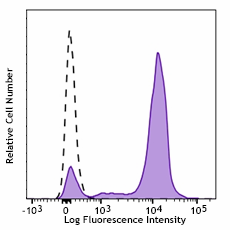
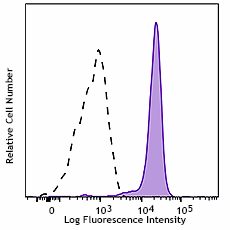
Typical results from human peripheral blood monocytes stained either with 10.1 FITC used at 5 µL/test (solid histogram) or with an isotype control (dashed histogram).

Compare all formats See FITC spectral data

Input string was not in a correct format.

Cat # Size Price Quantity Check Availability
983206 500 µL $200.00

Check Availability

Need larger quantities of this item?
Request Bulk Quote

DescriptionCD64 is a 72 kD single chain type I glycoprotein also known as FcγRI and FcR I. CD64 is a member of the immunoglobulin superfamily and is expressed on monocytes/macrophages, dendritic cells, and activated granulocytes. The expression can be upregulated by IFN-γ stimulation. CD64 binds IgG immune complex. It plays a role in antigen capture, phagocytosis of IgG/antigen complexes, and antibody-dependent cellular cytotoxicity (ADCC).

CD64 是一种 72 kD 的单链 I 型糖蛋白,也称为 FcγRI 和 FcR I。CD64 是免疫球蛋白超家族的成员,在单核细胞/巨噬细胞、树突状细胞和活化的粒细胞上表达。 表达可以通过干扰素γ 刺激上调。 CD64 结合 IgG 免疫复合物。 它在抗原捕获、IgG/抗原复合物的吞噬作用和抗体依赖性细胞毒性 (ADCC) 中发挥作用。

Product Details

Technical data sheet

Product Details

Reactivity
Human
Formulation
Phosphate-buffered solution, pH 7.2, containing 0.09% sodium azide and 0.2% (w/v) BSA (origin USA), and a stabilizer.
Preparation
The antibody was purified by affinity chromatography, and conjugated with FITC under optimal conditions.
Concentration
200 µg/mL
Storage & Handling
The antibody solution should be stored undiluted between 2°C and 8°C, and protected from prolonged exposure to light. Do not freeze.
Application
Suggested for Flow Cytometry
Disclaimer
WARNINGS AND PRECAUTIONS

  1. Use appropriate personal protective equipment and safety practices per universal precautions when working with this reagent. Refer to the reagent safety data sheet.
  2. This antibody contains sodium azide. Follow federal, state and local regulations to dispose of this reagent. Sodium azide build-up in metal wastepipes may lead to explosive conditions; if disposing of reagent down wastepipes, flush with water after disposal.
  3. All specimens, samples and any material coming in contact with them should be considered potentially infectious and should be disposed of with proper precautions and in accordance with federal, state and local regulations.
  4. Do not use this reagent beyond the expiration date stated on the label.
  5. Do not use this reagent if it appears cloudy or if there is any change in the appearance of the reagent as these may be an indication of possible deterioration.
  6. Avoid prolonged exposure of the reagent or stained cells to light.
  7. 使用此试剂时,请按照通用预防措施使用适当的个人防护设备和安全措施。 请参阅试剂安全数据表。
    该抗体含有叠氮化钠。 请按照联邦、州和地方法规处理此试剂。 叠氮化钠在金属废水管中的堆积可能导致爆炸情况; 如果通过废水管处理试剂,请在处理后用水冲洗。
    所有与它们接触的标本、样品和任何材料都应被视为具有潜在传染性,并应采取适当的预防措施并按照联邦、州和地方法规进行处置。
    请勿在标签上注明的有效期后使用该试剂。
    如果出现混浊或试剂外观有任何变化,请勿使用此试剂,因为这些可能表明可能变质。
    避免试剂或染色细胞长时间暴露在光线下。

Antigen Details

Antigen References
1. Hulett M, et al. 1994. Adv. Immunol. 57:1.
2. van de Winkel J, et al. 1993. Immunol. Today 14:215.

biolegend流式抗体,FITC anti-human CD64 Antibody,biolegend 305005,biolegend 305006

Pricing & Availability

Clone
10.1 (See other available formats)
Regulatory Status
RUO
Workshop
VI MA36
Other Names
FcγRI, FcR I
Isotype
Mouse IgG1, κ
Ave. Rating
Submit a Review
Product Citations
publications
FITC anti-human CD64 Antibody
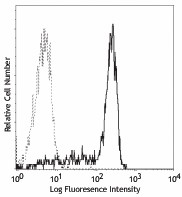
Human peripheral blood monocytes stained with 10.1 FITC

Compare all formats See FITC spectral data

Input string was not in a correct format.Input string was not in a correct format.

Cat # Size Price Quantity Check Availability
305005 25 tests $70.00

Check Availability

Need larger quantities of this item?
Request Bulk Quote

305006 100 tests $160.00

Check Availability

Need larger quantities of this item?
Request Bulk Quote

DescriptionCD64 is a 72 kD single chain type I glycoprotein also known as FcγRI and FcR I. CD64 is a member of the immunoglobulin superfamily and is expressed on monocytes/macrophages, dendritic cells, and activated granulocytes. The expression can be upregulated by IFN-γ stimulation. CD64 binds IgG immune complex. It plays a role in antigen capture, phagocytosis of IgG/antigen complexes, and antibody-dependent cellular cytotoxicity (ADCC).

CD64 是一种 72 kD 的单链 I 型糖蛋白,也称为 FcγRI 和 FcR I。CD64 是免疫球蛋白超家族的成员,在单核细胞/巨噬细胞、树突状细胞和活化的粒细胞上表达。 表达可以通过干扰素γ 刺激上调。 CD64 结合 IgG 免疫复合物。 它在抗原捕获、IgG/抗原复合物的吞噬作用和抗体依赖性细胞毒性 (ADCC) 中发挥作用。

Product Details

Technical data sheet

Product Details

Reactivity
Human, Baboon, Capuchin Monkey, Chimpanzee, Cynomolgus, Rhesus, Squirrel Monkey
Antibody Type
Monoclonal
Host Species
Mouse
Immunogen
Human rheumatoid synovial fluid cells and fibronectin-purified monocytes.
Formulation
Phosphate-buffered solution, pH 7.2, containing 0.09% sodium azide and 0.2% (w/v) BSA (origin USA).
Preparation
The antibody was purified by affinity chromatography, and conjugated with FITC under optimal conditions.
Concentration
Lot-specific (please contact technical support for concentration and total µg amount, or use our Lookup tool if you have a lot number.)
Storage & Handling
The antibody solution should be stored undiluted between 2°C and 8°C, and protected from prolonged exposure to light. Do not freeze.
Application
FC – Quality tested
Recommended Usage
Each lot of this antibody is quality control tested by immunofluorescent staining with flow cytometric analysis. For flow cytometric staining, the suggested use of this reagent is 5 µl per million cells in 100 µl staining volume or 5 µl per 100 µl of whole blood.
Excitation Laser
Blue Laser (488 nm)
Application Notes
Clone 10.1 recognizes the EC3 epitope of CD64. While both contain the EC3 domain, in-house testing suggests that clone 10.1 preferentially binds to CD64A (FcγRIA), but not CD64B (FcγRIB). Additional reported applications (for the relevant formats) include: blocking of human IgG3 and murine IgG2a binding to FcγRI2,5,6,11 and immunohistochemical staining of acetone-fixed frozen tissue sections12.
推荐用法
每批这种抗体都经过免疫荧光染色和流式细胞术分析的质量控制测试。 对于流式细胞仪染色,建议使用该试剂为 100 µl 染色体积中每百万个细胞 5 µl 或每 100 µl 全血 5 µl。激发激光
蓝色激光(488 nm)
应用笔记
克隆 10.1 识别 CD64 的 EC3 表位。 虽然两者都包含 EC3 结构域,但内部测试表明克隆 10.1 优先结合 CD64A (FcγRIA),而不是 CD64B (FcγRIB)。 其他报告的应用(针对相关格式)包括:阻断人 IgG3 和鼠 IgG2a 与 FcγRI2、5、6、11 的结合以及丙酮固定冷冻组织切片的免疫组织化学染色 12。
Application References(PubMed link indicates BioLegend citation)
  1. McMichael A, et al. Eds. 1987. Leucocyte Typing III. Oxford University Press. New York.
  2. Schlossman S, et al. Eds. 1995. Leucocyte Typing V. Oxford University Press. New York. p. 874.
  3. Kishimoto T, et al. Eds. 1997. Leucocyte Typing VI. Garland Publishing Inc. London.
  4. Holl V, et al. 2004. J. Immunol. 173:6274.
  5. Hober D, et al. 2002. J. Gen. Virol. 83:2169.
  6. Cho HJ, et al. 2007. Physiol Genomics 149:60.
  7. van Tits L, et al. 2005. Arterioscler Thromb Vasc Biol. 25:717. PubMed
  8. Bruhns P, et al. 2008. Blood 113:3716. PubMed
  9. Yoshino N, et al. 2000. Exp. Anim. (Tokyo) 49:97. (FC)
  10. Carter DL, et al. 1999. Cytometry 37:41. (FC)
  11. Dougherty GJ, et al. 1987. Eur. J. Immunol. 17:1453.
  12. Blom AB, et al. 2003. Arthritis Rheum. 48(4):1002-14. (IHC)
Product Citations
  1. Matt P, et al. 2015. PLoS One. 10: 0137474. PubMed
RRID
AB_314489 (BioLegend Cat. No. 305005)
AB_314490 (BioLegend Cat. No. 305006)

Antigen Details

Structure
Ig superfamily, type I glycoprotein, 72 kD
Distribution
Monocytes, macrophages, dendritic cells, activated granulocytes
Function
Phagocytosis, ADCC
Ligand/Receptor
IgG receptor
Cell Type
Dendritic cells, Granulocytes, Macrophages, Monocytes
Biology Area
Immunology, Innate Immunity
Molecular Family
CD Molecules, Fc Receptors
Antigen References
1. Hulett M, et al. 1994. Adv. Immunol. 57:1.
2. van de Winkel J, et al. 1993. Immunol. Today 14:215.
Gene ID
2209 View all products for this Gene ID
UniProt
View information about CD64 on UniProt.org

Related FAQs

Is our human Trustain FcX™ (cat# 422302) compatible with anti human CD16, CD32 and CD64 clones 3G8, FUN-2 and 10.1 respectively?
Yes

Other Formats

View All CD64 Reagents Request Custom Conjugation

Description Clone Applications
Biotin anti-human CD64 10.1 FC
FITC anti-human CD64 10.1 FC
PE anti-human CD64 10.1 FC
Purified anti-human CD64 10.1 FC, IHC-F, Block
Alexa Fluor® 488 anti-human CD64 10.1 FC
Alexa Fluor® 647 anti-human CD64 10.1 FC
APC anti-human CD64 10.1 FC
Pacific Blue™ anti-human CD64 10.1 FC
Brilliant Violet 421™ anti-human CD64 10.1 FC
PE/Cyanine7 anti-human CD64 10.1 FC
PerCP/Cyanine5.5 anti-human CD64 10.1 FC
APC/Cyanine7 anti-human CD64 10.1 FC
Brilliant Violet 510™ anti-human CD64 10.1 FC
Purified anti-human CD64 (Maxpar® Ready) 10.1 FC, CyTOF®
PE/Dazzle™ 594 anti-human CD64 10.1 FC
Brilliant Violet 605™ anti-human CD64 10.1 FC
APC/Fire™ 750 anti-human CD64 10.1 FC
PE anti-human CD64 10.1 FC
PE/Dazzle™ 594 anti-human CD64 10.1 FC
FITC anti-human CD64 10.1 FC
TotalSeq™-A0162 anti-human CD64 10.1 PG
Brilliant Violet 711™ anti-human CD64 10.1 FC
Alexa Fluor® 700 anti-human CD64 10.1 FC
Brilliant Violet 785™ anti-human CD64 10.1 FC
TotalSeq™-C0162 anti-human CD64 10.1 PG
Ultra-LEAF™ Purified anti-human CD64 10.1 FC, IHC-F, Block
TotalSeq™-B0162 anti-human CD64 10.1 PG
TotalSeq™-D0162 anti-human CD64 10.1 PG
GMP PE anti-human CD64 10.1 FC
GMP FITC anti-human CD64 10.1 FC

biolegend流式抗体,PE/Dazzle 594 anti-human CD64 Antibody

Pricing & Availability

Clone
10.1 (See other available formats)
Regulatory Status
RUO
Workshop
VI MA36
Other Names
FcγRI, FcR I
Isotype
Mouse IgG1, κ
Ave. Rating
Submit a Review
Product Citations
publications
PE/Dazzle™ 594 anti-human CD64 Antibody

Compare all formats See PE/Dazzle™ 594 spectral data

Input string was not in a correct format.Input string was not in a correct format.

Cat # Size Quantity Check Availability
305031 25 tests

Check Availability

Need larger quantities of this item?
Request Bulk Quote

305032 100 tests

Check Availability

Need larger quantities of this item?
Request Bulk Quote

DescriptionCD64 is a 72 kD single chain type I glycoprotein also known as FcγRI and FcR I. CD64 is a member of the immunoglobulin superfamily and is expressed on monocytes/macrophages, dendritic cells, and activated granulocytes. The expression can be upregulated by IFN-γ stimulation. CD64 binds IgG immune complex. It plays a role in antigen capture, phagocytosis of IgG/antigen complexes, and antibody-dependent cellular cytotoxicity (ADCC).

CD64 是一种 72 kD 的单链 I 型糖蛋白,也称为 FcγRI 和 FcR I。CD64 是免疫球蛋白超家族的成员,在单核细胞/巨噬细胞、树突状细胞和活化的粒细胞上表达。 表达可以通过干扰素γ 刺激上调。 CD64 结合 IgG 免疫复合物。 它在抗原捕获、IgG/抗原复合物的吞噬作用和抗体依赖性细胞毒性 (ADCC) 中发挥作用。

Product Details

Technical data sheet

Product Details

Reactivity
Human, Baboon, Capuchin Monkey, Chimpanzee, Cynomolgus, Rhesus, Squirrel Monkey
Antibody Type
Monoclonal
Host Species
Mouse
Immunogen
Human rheumatoid synovial fluid cells and fibronectin-purified monocytes.
Formulation
Phosphate-buffered solution, pH 7.2, containing 0.09% sodium azide and 0.2% (w/v) BSA (origin USA).
Preparation
Concentration
Lot-specific (please contact technical support for concentration and total µg amount, or use our Lookup tool if you have a lot number.)
Storage & Handling
The antibody solution should be stored undiluted between 2°C and 8°C, and protected from prolonged exposure to light. Do not freeze.
Application
FC – Quality tested
Recommended Usage
Each lot of this antibody is quality control tested by immunofluorescent staining with flow cytometric analysis. For flow cytometric staining, the suggested use of this reagent is 5 µl per million cells in 100 µl staining volume or 5 µl per 100 µl of whole blood.
Excitation Laser
Blue Laser (488 nm)
Green Laser (532 nm)/Yellow-Green Laser (561 nm)
Application Notes
Clone 10.1 recognizes the EC3 epitope of CD64. While both contain the EC3 domain, in-house testing suggests that clone 10.1 preferentially binds to CD64A (FcγRIA), but not CD64B (FcγRIB). Additional reported applications (for the relevant formats) include: blocking of human IgG3 and murine IgG2a binding to FcγRI2,5,6,11 and immunohistochemical staining of acetone-fixed frozen tissue sections12.
Application References(PubMed link indicates BioLegend citation)
  1. McMichael A, et al. Eds. 1987. Leucocyte Typing III. Oxford University Press. New York.
  2. Schlossman S, et al. Eds. 1995. Leucocyte Typing V. Oxford University Press. New York. p. 874.
  3. Kishimoto T, et al. Eds. 1997. Leucocyte Typing VI. Garland Publishing Inc. London.
  4. Holl V, et al. 2004. J. Immunol. 173:6274.
  5. Hober D, et al. 2002. J. Gen. Virol. 83:2169.
  6. Cho HJ, et al. 2007. Physiol Genomics 149:60.
  7. van Tits L, et al. 2005. Arterioscler Thromb Vasc Biol. 25:717. PubMed
  8. Bruhns P, et al. 2008. Blood 113:3716. PubMed
  9. Yoshino N, et al. 2000. Exp. Anim. (Tokyo) 49:97. (FC)
  10. Carter DL, et al. 1999. Cytometry 37:41. (FC)
  11. Dougherty GJ, et al. 1987. Eur. J. Immunol. 17:1453.
  12. Blom AB, et al. 2003. Arthritis Rheum. 48(4):1002-14. (IHC)
Product Citations
  1. Izadi D, et al. 2019. Sci Adv. 5:eaay0370. PubMed
RRID
AB_2564185 (BioLegend Cat. No. 305031)
AB_2564186 (BioLegend Cat. No. 305032)

Antigen Details

Structure
Ig superfamily, type I glycoprotein, 72 kD
Distribution
Monocytes, macrophages, dendritic cells, activated granulocytes
Function
Phagocytosis, ADCC
Ligand/Receptor
IgG receptor
Cell Type
Dendritic cells, Granulocytes, Macrophages, Monocytes
Biology Area
Immunology, Innate Immunity
Molecular Family
CD Molecules, Fc Receptors
Antigen References
1. Hulett M, et al. 1994. Adv. Immunol. 57:1.
2. van de Winkel J, et al. 1993. Immunol. Today 14:215.
Gene ID
2209 View all products for this Gene ID
UniProt
View information about CD64 on UniProt.org

Related FAQs

Is our human Trustain FcX™ (cat# 422302) compatible with anti human CD16, CD32 and CD64 clones 3G8, FUN-2 and 10.1 respectively?
Yes

Other Formats

View All CD64 Reagents Request Custom Conjugation

Description Clone Applications
Biotin anti-human CD64 10.1 FC
FITC anti-human CD64 10.1 FC
PE anti-human CD64 10.1 FC
Purified anti-human CD64 10.1 FC, IHC-F, Block
Alexa Fluor® 488 anti-human CD64 10.1 FC
Alexa Fluor® 647 anti-human CD64 10.1 FC
APC anti-human CD64 10.1 FC
Pacific Blue™ anti-human CD64 10.1 FC
Brilliant Violet 421™ anti-human CD64 10.1 FC
PE/Cyanine7 anti-human CD64 10.1 FC
PerCP/Cyanine5.5 anti-human CD64 10.1 FC
APC/Cyanine7 anti-human CD64 10.1 FC
Brilliant Violet 510™ anti-human CD64 10.1 FC
Purified anti-human CD64 (Maxpar® Ready) 10.1 FC, CyTOF®
PE/Dazzle™ 594 anti-human CD64 10.1 FC
Brilliant Violet 605™ anti-human CD64 10.1 FC
APC/Fire™ 750 anti-human CD64 10.1 FC
PE anti-human CD64 10.1 FC
PE/Dazzle™ 594 anti-human CD64 10.1 FC
FITC anti-human CD64 10.1 FC
TotalSeq™-A0162 anti-human CD64 10.1 PG
Brilliant Violet 711™ anti-human CD64 10.1 FC
Alexa Fluor® 700 anti-human CD64 10.1 FC
Brilliant Violet 785™ anti-human CD64 10.1 FC
TotalSeq™-C0162 anti-human CD64 10.1 PG
Ultra-LEAF™ Purified anti-human CD64 10.1 FC, IHC-F, Block
TotalSeq™-B0162 anti-human CD64 10.1 PG
TotalSeq™-D0162 anti-human CD64 10.1 PG
GMP PE anti-human CD64 10.1 FC
GMP FITC anti-human CD64 10.1 FC

biolegend流式抗体-TotalSeq C0162 抗人 CD64 抗体,biolegend 305045

Pricing & Availability

Clone
10.1 (See other available formats)
Regulatory Status
RUO
Workshop
VI MA36
Other Names
FcγRI, FcR I
Isotype
Mouse IgG1, κ
Barcode Sequence
AAGTATGCCCTACGA
Ave. Rating
Submit a Review
Product Citations
publications
Compare all formats

Input string was not in a correct format.

Cat # Size Price Quantity Check Availability
305045 10 µg $325.00

Check Availability

Need larger quantities of this item?
Request Bulk Quote

DescriptionCD64 is a 72 kD single chain type I glycoprotein also known as FcγRI and FcR I. CD64 is a member of the immunoglobulin superfamily and is expressed on monocytes/macrophages, dendritic cells, and activated granulocytes. The expression can be upregulated by IFN-γ stimulation. CD64 binds IgG immune complex. It plays a role in antigen capture, phagocytosis of IgG/antigen complexes, and antibody-dependent cellular cytotoxicity (ADCC).

说明 CD64 是一种 72 kD 的单链 I 型糖蛋白,也称为 FcγRI 和 FcR I。CD64 是免疫球蛋白超家族的成员,在单核细胞/巨噬细胞、树突状细胞和活化的粒细胞上表达。 表达可以通过干扰素γ 刺激上调。 CD64 结合 IgG 免疫复合物。 它在抗原捕获、IgG/抗原复合物的吞噬作用和抗体依赖性细胞毒性 (ADCC) 中发挥作用。

Product Details

Technical data sheet

Product Details

Reactivity
Human, Baboon, Capuchin Monkey, Chimpanzee, Cynomolgus, Rhesus, Squirrel Monkey
Antibody Type
Monoclonal
Host Species
Mouse
Immunogen
Human rheumatoid synovial fluid cells and fibronectin-purified monocytes.
Formulation
Phosphate-buffered solution, pH 7.2, containing 0.09% sodium azide and 1 mM EDTA.
Preparation
Concentration
0.5 mg/ml
Storage & Handling
The antibody solution should be stored undiluted between 2°C and 8°C. Do not freeze.
Application
PG – Quality tested
Recommended Usage
Each lot of this antibody is quality control tested by immunofluorescent staining with flow cytometric analysisSolution.
Application Notes
Clone 10.1 recognizes the EC3 epitope of CD64. While both contain the EC3 domain, in-house testing suggests that clone 10.1 preferentially binds to CD64A (FcγRIA), but not CD64B (FcγRIB). Additional reported applications (for the relevant formats) include: blocking of human IgG3 and murine IgG2a binding to FcγRI2,5,6,11 and immunohistochemical staining of acetone-fixed frozen tissue sections12.
Additional Product Notes
10x Genomics Chromium System and Reagents) and sequencer (e.g. Illumina analyzers) are required. Please contact technical support for more information, or visit biolegend.com/totalseq.

The barcode flanking sequences are CGGAGATGTGTATAAGAGACAGNNNNNNNNNN (PCR handle), and NNNNNNNNNCCCATATAAGA*A*A (capture sequence). N represents either randomly selected A, C, G, or T, and * indicates a phosphorothioated bond, to prevent nuclease degradation.

View more applications data for this product in our Scientific Poster Library.

Application References(PubMed link indicates BioLegend citation)
  1. McMichael A, et al. Eds. 1987. Leucocyte Typing III. Oxford University Press. New York.
  2. Schlossman S, et al. Eds. 1995. Leucocyte Typing V. Oxford University Press. New York. p. 874.
  3. Kishimoto T, et al. Eds. 1997. Leucocyte Typing VI. Garland Publishing Inc. London.
  4. Holl V, et al. 2004. J. Immunol. 173:6274.
  5. Hober D, et al. 2002. J. Gen. Virol. 83:2169.
  6. Cho HJ, et al. 2007. Physiol Genomics 149:60.
  7. van Tits L, et al. 2005. Arterioscler Thromb Vasc Biol. 25:717. PubMed
  8. Bruhns P, et al. 2008. Blood 113:3716. PubMed
  9. Yoshino N, et al. 2000. Exp. Anim. (Tokyo) 49:97. (FC)
  10. Carter DL, et al. 1999. Cytometry 37:41. (FC)
  11. Dougherty GJ, et al. 1987. Eur. J. Immunol. 17:1453.
  12. Blom AB, et al. 2003. Arthritis Rheum. 48(4):1002-14. (IHC)
RRID
AB_2800781 (BioLegend Cat. No. 305045)

Antigen Details

Structure
Ig superfamily, type I glycoprotein, 72 kD
Distribution
Monocytes, macrophages, dendritic cells, activated granulocytes
Function
Phagocytosis, ADCC
Ligand/Receptor
IgG receptor
Cell Type
Dendritic cells, Granulocytes, Macrophages, Monocytes
Biology Area
Immunology, Innate Immunity
Molecular Family
CD Molecules, Fc Receptors
Antigen References
1. Hulett M, et al. 1994. Adv. Immunol. 57:1.
2. van de Winkel J, et al. 1993. Immunol. Today 14:215.
Gene ID
2209 View all products for this Gene ID
UniProt
View information about CD64 on UniProt.org

Related Products

Description Clone Applications

Related FAQs

Is our human Trustain FcX™ (cat# 422302) compatible with anti human CD16, CD32 and CD64 clones 3G8, FUN-2 and 10.1 respectively?
Yes
TotalSeq™ is BioLegend’s brand of antibody-oligonucleotide conjugates, to enable simultaneous analysis of proteins and mRNA in single cells. CITE-seq and REAP-seq are two similar workflows for simultaneous protein and mRNA analysis, and the TotalSeq™ conjugates integrate seamlessly into these established protocols.
The main difference between the 3 formats relates to the sequences of the oligo tags and their downstream compatibility with single-cell sequencing platforms.

  • TotalSeq™-A reagents use a poly-A capture method that is instrument agnostic which includes the 10x Genomics 3’ Single Cell Gene expression kit.
  • TotalSeq™-B utilizes the feature barcode technology for 10x Genomics 3’ Single Cell Gene expression kit.
  • TotalSeq™-C also uses the feature barcode technology but for 10x Genomics 5’ V(D)J expression kit.

They each use different primers for library amplification. You can read a little more about the differences on our TotalSeq™ webpage.

We are not currently able to support the mixing of TotalSeq™-A and TotalSeq™-B reagents in a single experiment. These two product lines require different protocols for library prep, and the different capturing methods may cause discrepancies in capture efficiency. In addition, it can often cause issues downstream in the bioinformatics portion when analyzing your data due to the variations in index sequences and lengths. In theory, they should work together, but in practice it can be quite difficult and we advise against doing so whenever possible.
Either will work fine.
When discussing single-cell data, features are any aspect of the cell that is being measured. Common features are mRNA, protein, sgRNA, etc.
TotalSeq™-A/B/C products are fully supported by BioLegend and have been internally tested by BioLegend on the 10x Genomics platform. TotalSeq™-B and C are fully supported by 10x Genomics. 10x Genomics provides limited support for TotalSeq™-A.

If you are unsure about which technical service team to contact if you have questions or issues, feel free to reach out to BioLegend and we will work with our partners to resolve your problem or answer your technical questions.

What are “Hashtags”?
Hashtag reagents are intended to be used for sample barcoding, which allows users to combine multiple samples into a single lane, then de-multiplex during analysis. Instead of select antigen-specific antibodies, the hashtags are designed so that they are specific for human or mouse cells, and to cover as many cells as possible. For human samples, the hashtags are made of two antibodies that recognize ubiquitous surface markers, CD298 and β2 microglobulin, each conjugated to the same oligonucleotide containing the barcode sequence. For mouse samples, the surface markers are CD45 and H-2 MHC class I. The conjugates are already pre-mixed and ready to use.
Hashing allows customers to run multiple samples in a single lane of a 10x Genomics Chromium instrument, or equivalent, which optimizes the number of cells or samples that can be analyzed simultaneously. This can reduce variability due to batch effects or sample handling. It can also help to identify doublets more efficiently. Furthermore, it can also improve yield and help with cell input when cell numbers are low, therefore optimizing the use of the platform and your workflow or protocol.
Typically, when using a single-cell platform, as you increase the amount of input cells, the rate of doublets (two cells captured as one data point) increases. This leads to an unacceptable percentage of datapoints that contain more than one cell. Hashtags allows you to “super load” the number of cells. To this end, multiple aliquots of the same sample could be stained with as many hashtags as aliquots you’d wish to mix. The number of aliquots and number of cells per aliquot may vary, but after washing and mixing the cells, following the staining and analysis protocol, if more than one hashtag is detected in a single-cell “event”, that event can be safely discarded as a doublet. This does not eliminate doublets that contain the same hashtag but the rate of doublet detection is greatly increased. However, “super loading” should be carefully controlled as the more cells you load the more doublets occur, causing diminishing returns overall. There should be a balance between multi-sample optimization, single-cell data yield, and optimal instrument/platform performance.
What are nuclear hashtags?
Nuclear hashtags are used for single-nucleus RNA-seq (snRNA-seq) samples. snRNA-seq captures RNAs that are isolated with the nucleus. This is done because whole, intact cells may be difficult to isolate due to specific experimental or sample conditions, or to answer a specific scientific question. See an example of nuclear hashtag application in this paper: https://www.nature.com/articles/s41467-019-10756-2
Can I use nuclear hashtags for single cell ATAC-seq?
Unfortunately, our TotalSeq™ reagents are not directly compatible with single ATAC-seq kits at this time. However, the NYGC has pioneered a bridging method ATAC with Select Antigen Profiling by sequencing (ASAP-seq) which is able to bridge TotalSeq™ antibodies with other capture platforms such as scATAC-seq. https://www.biorxiv.org/content/10.1101/2020.09.08.286914v1

Our nuclear hashtag products available off the shelf, but we do not currently have a recommended protocol for this application at this time.
The only recommendations we can provide are literature references such as this one:
https://www.nature.com/articles/s41467-019-10756-2

Can I get technical support when using hashtags?
Hashtags can absolutely be used in any single cell platform including the 10x Genomics platform. BioLegend fully supports the usage of hashtags. Please contact our technical service group for more information.
We have not tested this, but there is no reason to believe that non-competing clones for the same target would be problematic. Similarly, a sub-saturating concentration of both reagents against the same target should be tolerated by the cell/technique. The original CITE-seq paper by Stoeckius et al.(Fig. 2) demonstrated that cells can be co-stained for downstream analyses. Although the authors did not use current TotalSeq™ reagents, the technology is the same. In addition, other CITE-seq users have also demonstrated this approach. Please contact our technical service group for more information.
Why is it essential to remove dead cells prior to subjecting samples for CITE-seq?
We recommend >95% viability before beginning you CITE-seq experiment. Running dead cells during CITE-seq essentially leads to “wasting” single cell runs on dead cells, which may ultimately lead to sub-optimal data, or not processing enough cells to pick up the positive events, especially if the frequency of your target cell is very low. Dead cells can also be removed using magnetic beads. If performing CITE-seq before eliminating dead cells is required, it is possible to use bioinformatics methods to try to clean up low quality events (which may include dead cells). This could be a more complex approach, but in such cases, we recommend the following reading:
Is it necessary to sort samples prior to CITE-seq? What should I consider when deciding to pre-sort, or not?
If the populations of interest can be clustered/identified without sorting, the likelihood that you need to pre-sort is minimal. However, if the cell number in the cluster is very small, it may not be sufficient to draw conclusions when compared to control, or other cell populations. In which case, enrichment of this population prior to CITE-seq analysis may help with obtaining more meaningful sequencing data that is selective for your rare cell population(s) of interest. We also recommend to sort out dead cells if the viability in a sample is lower than 95%.
We have developed pre-titrated, lyophilized TotalSeq™ panels to facilitate the use of combined antibodies. We have panels in all three formats (TotalSeq™-A, B, and C) designed to identify the main immune cells, as well as a universal panel that contains antibodies against 130 protein targets, and 7 isotype controls. We will keep on releasing these pre-optimized panels as we understand that titrating dozens of antibodies for this application is not an easy task. We may not be able to provide specific titration values for individual antibodies as that may depend on multiple factors. However, here are some recommendations in case you may not be able to use our panels, and need to perform your own titrations:

  1. Performing titrations using the actual CITE-seq method is costly, but using hashtags can make the process more affordable. See Fig. 3 and associated methods of this publication for more information.
  2. Perform flow cytometry experiments to find the optimal antibody concentration, using the same clone conjugated to PE. The flow cytometry antibody amount should translate well to CITE-seq.
  3. Label the cells with different concentrations of a TotalSeq™ antibody, and then use a poly(dT) oligo conjugated to a fluorophore, such as Alexa Fluor® 647, as a secondary reagent to detect the TotalSeq™ antibody. This is a more direct method, but it requires the use of the actual TotalSeq™ antibody.
What tools are available for data analysis?
Some available resources include CITE-Seq-Count, and the tools developed by the Rahul Satija laboratory. Please contact our technical service group for further information.
I need to order primers; where do I order them and what purity is needed?
There are several companies offering primer synthesis. We can recommend IDT technologies. For additive primers, desalt purification is sufficient. For index primers, either HPLC or PAGE is needed.
Why should I generate ADT/HTO libraries separate from mRNA?
Separate ADT/HTO and mRNA libraries provide flexibility when sequencing. Libraries can be mixed at different ratios before sequencing depending on the number of reads needed. Typically, ADT/HTO libraries require less sequencing depth compared to their mRNA counterparts.
How is the oligo tag bound to the antibody so that it does not interfere with antibody binding to target protein?
The oligo is attached to the antibody in the same method as some of our fluorophore-conjugated antibodies that are quality tested by flow cytometry. Once the antibodies have been conjugated to the oligonucleotide, we verify by flow cytometry that the antibody can still bind to its target. This is part of our quality control process for TotalSeq™ conjugates.
Not in the same experiment; it is not possible because CyTOF® requires its own instrument and protocol, and it destroys the sample in the process. To do so, it is necessary to split the sample and run both CyTOF® and CITE-seq assays. Note that CITE-seq generates equivalent data for surface proteins as CyTOF® with higher panel multiplexing capabilities and at a single-cell level.
Can CITE-seq be extended to micro-RNAs?
This is a technically challenging application as micro-RNAs are very small, and in many cases will be as small as or even smaller than the required primers to execute the protocol. It is not possible at the moment.
Yes, the protocol to perform bulk epitope and nucleic acid sequencing (BEN-seq) has been developed as a collaboration between Illumina and BioLegend. You can read more about it in our application note.
Is autofluorescence an issue as in flow cytometry?
No, sequencing as the final readout is not affected by cell autofluorescence.
This has to do mostly with antibody affinity, titration, and level of antigen expression. BioLegend and some collaborators are working on titration data. There is also some data already published. In theory, as long as the antibody can bind one molecule, PCR amplification and sequencing should pick it up, but there is always background noise. A common way to control for this is to add negative cells to your experiment. For example, if working with human PBMCs, use mouse cells and vice versa.
How many cells do you need per experiment?
This depends on the biological question that needs to be answered. From the technical perspective, when using 10x Genomics Chromium, it is recommended to load 5,000 – 10,000 cells per lane. The use of hashtags can increase that number. For ease of staining, we typically recommend 1 million cells, but this number also depends on availability of cells and the operator’s ability to handle low cell numbers.
We have optimized multiple pre-mixed antibody cocktails, including TotalSeq™-A, -B, or -C Human TBNK that contain 9 antibodies and our TotalSeq™-C Human Universal Cocktail, v1.0 which contains an unprecedented 130 target antibodies plus 7 isotype controls in a single vial. We will be releasing more panels in the near future. The literature suggests that panels larger than these cocktails are possible. For example, Yapeng et al. published a study using 197 TotalSeq™ antibodies and 7 isotype controls. BioLegend and the scientific community keep pushing the upper limits of multiplexed protein detection by sequencing and have yet to find one.
Is it possible to do FACS sorting first then do CITE-Seq, while performing both antibody-oligo and antibody-fluorophore labelling at the same time? Will the oligo conjugate withstand sorting?
The oligo should withstand sorting. However, based on theoretical considerations we recommend using non-competing clones, to minimize impact in either FACS or sequencing signal/reading. Even if exposed for a very short time, we have not evaluated the effect of ultraviolet or violet lasers on the oligo conjugates. An alternative to flow sorting could be negative magnetic bead enrichment, such as our MojoSort™ platform.
What should be my sequencing depth be for my ADT/HTO library?
We recommend a sequencing depth of 5,000 reads/cell. If you are using more than 100 TotalSeq™ antibodies, you should increase to 10,000 reads/cell. For HTOs alone, 500 reads/cell is sufficient.
Do I need isotype controls?
Isotype controls are highly recommended but not required. The utility of isotype controls in these applications is that they can help identify “sticky cells” caused by cells with compromised viability. Isotype controls also provide an overall picture of the background level or non-specific binding of different cell types. Typically when running isotype controls for CITE-seq assays, you want to include 1 isotype control for every isotype included in the panel, regardless of how many antibodies there are. We recommend using the isotype control at a concentration matching the highest concentration of a single antibody used in a panel, for that particular isotype. Typically, the isotype controls should be used in the same tube as the panel itself. Unlike a traditional flow cyometry experiment, the isotype controls for multiomics cell characterization do not need their own separate samples for comparison. Isotype controls are included in our TotalSeq™ Universal Cocktails.

Another useful control to help identify positive signals are cells known to not bind the antibodies used. For example, murine cells when characterizing human samples, as long as the antibodies do not cross-react between mouse and human targets. This, however, is not required to confidently identify positive signals.

Should I use dextran sulfate to block?
Several genomics protocols, including some from 10x Genomics, may recommend including dextran sulfate as a blocker to prevent unwanted charge interactions between nucleic acids and other positively charged molecules. However, we have found that in some cases, the inclusion of dextran sulfate can interfere with antibody binding and recognition and we do not recommend using it with any of our TotalSeq™ reagents. It’s unclear what is the exact mechanism of action that causes this issue. All our protocols reflect this observation; thus we do not recommend the use of dextran sulfate.

Other Formats

View All CD64 Reagents Request Custom Conjugation

Description Clone Applications
Biotin anti-human CD64 10.1 FC
FITC anti-human CD64 10.1 FC
PE anti-human CD64 10.1 FC
Purified anti-human CD64 10.1 FC, IHC-F, Block
Alexa Fluor® 488 anti-human CD64 10.1 FC
Alexa Fluor® 647 anti-human CD64 10.1 FC
APC anti-human CD64 10.1 FC
Pacific Blue™ anti-human CD64 10.1 FC
Brilliant Violet 421™ anti-human CD64 10.1 FC
PE/Cyanine7 anti-human CD64 10.1 FC
PerCP/Cyanine5.5 anti-human CD64 10.1 FC
APC/Cyanine7 anti-human CD64 10.1 FC
Brilliant Violet 510™ anti-human CD64 10.1 FC
Purified anti-human CD64 (Maxpar® Ready) 10.1 FC, CyTOF®
PE/Dazzle™ 594 anti-human CD64 10.1 FC
Brilliant Violet 605™ anti-human CD64 10.1 FC
APC/Fire™ 750 anti-human CD64 10.1 FC
PE anti-human CD64 10.1 FC
PE/Dazzle™ 594 anti-human CD64 10.1 FC
FITC anti-human CD64 10.1 FC
TotalSeq™-A0162 anti-human CD64 10.1 PG
Brilliant Violet 711™ anti-human CD64 10.1 FC
Alexa Fluor® 700 anti-human CD64 10.1 FC
Brilliant Violet 785™ anti-human CD64 10.1 FC
TotalSeq™-C0162 anti-human CD64 10.1 PG
Ultra-LEAF™ Purified anti-human CD64 10.1 FC, IHC-F, Block
TotalSeq™-B0162 anti-human CD64 10.1 PG
TotalSeq™-D0162 anti-human CD64 10.1 PG
GMP PE anti-human CD64 10.1 FC
GMP FITC anti-human CD64 10.1 FC